




A Lone Star Holiday: Music, Magic, & Merriment
- This event has passed.
December 13, 2025 | 4:00 pm - 5:30 pm
Event Navigation
(En español)
Purchase Tickets
December 13, 2025 | 4 pm
McCallum High School Fine Arts Center
5600 Sunshine Drive
Austin, TX 78756
Dr. W.P. Sterneman III, Interim Music Director
TK Kenney, Narrator
Julia Watkins-Davis, Soprano
Maureen Broy Papovich, Alto
Bruce Douglas, Tenor
Jake Skipworth, Bass
Program
Bill Holcombe
‘Twas the Night Before Christmas
TK Kenney, Narrator
Alan Silvestri y Glen Ballard, arr Jerry Brubaker
Concert Suite from The Polar Express
Ralph Vaughan Williams
Fantasia on Greensleeves
Georges Bizet
Farandole – L’rlesienne Suite No. 2
Bill Holcombe
Festive Sounds of Hanukkah
Golden Tickets winners come on stage
Leroy Anderson
Sleigh Ride
INTERMISSION
Peter Ilitch Tchaikovsky
Nutcracker Suite
Overture Miniature
Characteristic Dances: March, Coffee, Dance of the Sugar
Plum Fairy, Tea, Trepak, Mirlitons
Waltz of the Flowers
arranged by Lucas Richman
Christmas Sing-Along
Julia Watkins-Davis, Soprano
Maureen Broy Papovich, Alto
Bruce Douglas, Tenor
Jake Skipworth, Bass
Raffle to conduct the orchestra
J. Pierpont/Sousa, setting by Robert W. Smith
Jingle Bells Forever
Purchase Tickets
ABOUT THE PROGRAM
Lone Star Holiday Concert
‘Twas the Night Before Christmas - (note by the composer) Clement Clarke Moore, an American poet born in New York City in 1779 is credited with the writing of “A Visit To St. Nicholas” for his children in 1822. It was first published anonymously in the Troy (New York) Sentinel in 1823. Moore was educated at Columbia College (now Columbia University). Clement Clarke Moore passed away in 1863, but his poem which begins– “Twas the Night Before Christmas” will live on forever. This music was commissioned for a Christmas Concert by the Philly Pops conducted by Peter Nero, and was designed to feature the Phillie’s star pitcher Tug McGraw. Since the premiere in the 80’s, many orchestras have featured a prominent citizen as the narrator: Radio and TV personalities, politicians, principals of schools, etc. — Bill Holcombe
Concert Suite from The Polar Express – The Concert Suite from The Polar Express is a suite of four tunes from the 2004 Christmas-themed film starring Tom Hanks. The movie, which employed motion capture computer-animation, is based on the popular children's book of the same title by Chris Van Allsburg. The songs are “Believe,” which earned a Grammy Award, “The Polar Express”, “When Christmas Comes to Town” and “Spirit of the Season”. The music was composed by veteran movie music writers Alan Silvestri and Glen Ballard, and arranged by Jerry Brubaker.
Fantasia on Greensleeves - The tune “Greensleeves” has worn a number of texts over the centuries, gaining its Christmas dress in the 19th century with William Chatterton Dix’s text “What Child is this, who laid to rest, on Mary’s lap is sleeping.” Although Vaughan Williams composed a number of works for the Christmas season, his Fantasia on Greensleeves was not written with a Christmas connection at all. Building on Shakespeare’s reference to the popular 16th century folk tune “The Ballad of My Lady Greensleeves” in the play, The Merry Wives of Windsor, the composer combined it with a folk song from Norfolk to create atmospheric music for Sir John in Love, an opera based on that play. Vaughan Williams’ arrangement heard today is scored for flutes, harp and strings, a sound befitting either an Elizabethan drama or a lullaby for the nativity. — Linda Mack, Denver, CO, used by permission
L'Arlesienne Suite No. 2 - Bizet’s short life of thirty-six years was largely filled with disappointments. In the end he was not even to know that his opera Carmen would become one of the most popular operas of all time, as he died three months following its disastrous premiere. Following early studies with his parents, he was enrolled in the Paris Conservatoire. There he excelled, winning many prizes including the premiere composition prize, the Prix de Rome, at age 19. Bizet had not done much travel prior to the trip to Rome, therefore the journey through the landscapes of the south of France and Italy made a particularly strong impression on the young man. This experience proved fruitful when in 1872 Bizet was engaged to provide incidental music for the Théâtre Lyrique production of Daudet’s L’arlésienne (The Woman of Arles). The composer provided twenty-seven pieces for stage orchestra to accompany the action, much of it played under spoken dialogue. Daudet was thrilled with the music that so eloquently captured the essence of Provence and its people, but the whole enterprise was not well received by the Parisian audiences and theater critics. A few musicians, including Massenet, understood the quality of the music and encouraged the composer to recast the music for concert use. Bizet quickly arranged four pieces for full orchestra, and that group, Suite No. 1, proved a success in the concert hall from its first hearing in November of that same year. It wasn’t until after the composer’s death that his lifelong friend, Ernest Guiraud, arranged four more pieces into the Suite No. 2. It is interesting to note that the Farandole is one of three Provençal folk tunes utilized in the complete incidental music. — Linda Mack, used by permission
Festive Sounds of Hanukah - This festive medley celebrates all the most beloved songs of Hanukah, including “Maoz Tsur” (Rock of Ages), “Mi Y’ Malel” (Who Can Retell), “Hanukah, Hanukah,” “My Dreidel,” “S’ Vivon” (Spin, Dreidel), and “Hanukah, O Hanukah.”
Sleigh Ride - The music of Leroy Anderson, a composer of distinctive and delightful miniatures, is firmly entrenched in American popular culture. Many of his works were introduced by the Boston Pops Orchestra under the direction of Arthur Fiedler. John Williams described Anderson as "one of the great American masters of light orchestral music."
The Andersons spent the summer of 1946 at Painter Hill in Woodbury, Connecticut. It was here that he composed Sleigh Ride during a heat wave.
Nutcracker Suite - A staple of musical holiday fare is Tchaikovsky’s Nutcracker. If people have not seen or heard of another ballet, they certainly recognize tunes that portray the sugar plum fairy or the waltzing flowers. The first performance of the Nutcracker Suite was performed in St. Petersburg March 7, 1892, as a sneak preview for the complete ballet, and was a great success with the public. It was the ballet itself, an adaptation from E.T.A. Hoffman’s fairy tale, The Nutcracker and the Mouseking, that had trouble gaining a foothold in the ballet repertory–in fact it was a 75-year journey to acceptance. Without the composer’s marvelous music, the ballet surely would not have survived. Today the story of the young Clara, her love for her “ugly” nutcracker, the growing Christmas tree, the battle between the toys and mice, Clara’s role in the release of the enchanted prince from his spell, and the journey through the snow to the kingdom of sweets where the sugar plum fairy reigns as queen, has become famous through live ballet performances, TV, film, cartoons, books, websites, and toys.
While the Suite does not include much of the music that carries the plot of the story, it does present a sampling of the wonderful melodies and distinctive tone colors that characterize all the music of the ballet. Perhaps the most dramatic example of the care that Tchaikovsky took with color was his desire to use a new instrument, the celesta, to depict the lightness and grace of the Sugar Plum Fairy. Patented in Paris in 1886, the celesta (an instrument made of metal bars played from a keyboard) was not well known at the time. Tchaikovsky ordered an instrument for this piece, but asked that its purchase be kept a secret as he didn’t want another composer–particularly Rimsky-Korsakov–to “steal” his idea. The maneuver worked, the instrument has since become a regular orchestral keyboard instrument, but continues to be best known in its original role as the voice of the Sugar Plum Fairy. The Suite begins as does the ballet, with an Overture, orchestrated with light strings and winds, which invites us to enter the magical world of the fairy tale. Immediately following is the March which introduces the Christmas party scene. The remaining pieces are all second act characteristic dances, which take place in the Kingdom of Sweets, illustrated by appropriate orchestral colors. 1) Dance of the Sugar Plum Fairy; 2) Russian Dance (Trepak); 3) Arabian Dance (Coffee); 4) Chinese Dance (Tea); 5) Dance of the Mirlitons (reedpipes—kazoo-like instruments, but actually played by flute trio); 6) Waltz of the Flowers brings the suite to a grand conclusion with woodwind and harp introduction, then the horns lead the way to the dance. — Linda Mack, used by permission
Christmas Sing-Along - Deck your concert hall with a joyful and heartwarming medley of some of the most beloved Christmas carols, including “Joy to the World,” “Oh Come All Ye Faithful,” “O Little Town of Bethlehem,” “Angels We Have Heard on High,” “The First Noel” and “Deck the Hall.” A spirited sing-along guaranteed to delight audiences young and old!
Commissioned by the Pittsburgh Symphony Orchestra, this arrangement has been a perennial favorite for numerous ensembles across the United States!
Jingle Bells Forever – Jingle Bells Forever is a setting of two American favorites that weaves the melodic line from Pierpont’s “Jingle Bells” through Sousa’s unmistakable march style. Drawn from “The Stars and Stripes Forever,” Sousa’s immortal march that has become the official national march of the United States, the familiar strains provide the perfect accompaniment for the most festive of Christmas melodies. Sousa’s famous grandioso with the piccolo descant and trombone countermelody draw this new holiday concert standard to a rousing conclusion. — Robert W. Smith
ABOUT THE ARTISTS
Dr. W.P. Sterneman III
 Dr. Gus, as he is affectionately known, earned his Doctorate in Opera/Musical Theatre Conducting at Arizona State University where his dissertation focused on Benjamin Britten as a conductor and musical interpretation and his Master’s degree at Butler University in Indianapolis with a double major in Instrumental Conducting and Music History. He also holds a Bachelors of Music in Music Theory from Southwestern University.
Dr. Gus has been on staff with the Austin Civic Orchestra since 2014, currently serving as their Interim Music Director, having also previously performed with the ensemble in the horn section from 2002-2007. In addition to conducting the educational concert, Link-Up, and the Austin ISD Music Memory Contest, Dr. Gus leads the annual outdoor Pops Concert in June and the Great Masked Waltz Ball for the University of Texas Ballroom Dance Society.
Dr. Gus joined the staff of Abiding Love Lutheran Church in South Austin in 2021 as their Director of Worship and Arts, overseeing all aspects of the music program, worship planning, and media technology. In addition to leading the Sanctuary Choir in weekly service, Dr. Gus occasionally joins the band Mixed Blessings on guitar, and directs the biannual Cantata Choir and Orchestra, recently having led Handel’s Messiah and John Rutter’s Requiem.
From 2018-2024, Dr. Gus served as the Music Director for the Heart of Texas Chorus, an acappella barbershop chorus in San Marcos, and worked as an active clinician with the Barbershop Harmony Society.
Dr. Gus has conducted a variety of ensembles from small chamber groups to full size orchestras, and has worked with ensembles from middle school through collegiate, amateur, and professional organizations on three continents. He has conducted orchestras, opera and musical theatre productions, wind ensembles, and choral organizations. In 2013, he received an AriZoni Award nomination for Best Music Direction in a Non-Contract Theatre for Little Women: The Broadway Musical at Arizona State University.
A strong advocate for technology in the classroom, Dr. Gus has taught music technology courses at multiple universities, and has been actively involved with the Association for Technology in Music Instruction (ATMI), where he presented a paper on OpenSource music notation software in 2010.
Dr. Gus spends his free time playing tabletop games with his wife, teaching his two children the finer points of musical theatre, and practicing his passion for lutherie and painting miniatures. He feels Menotti is the epitome of English text setting, but always comes home to Beethoven. He enjoys a good pun, but loves a really bad one. And coffee. Lots of coffee.
TiWanna Kenney
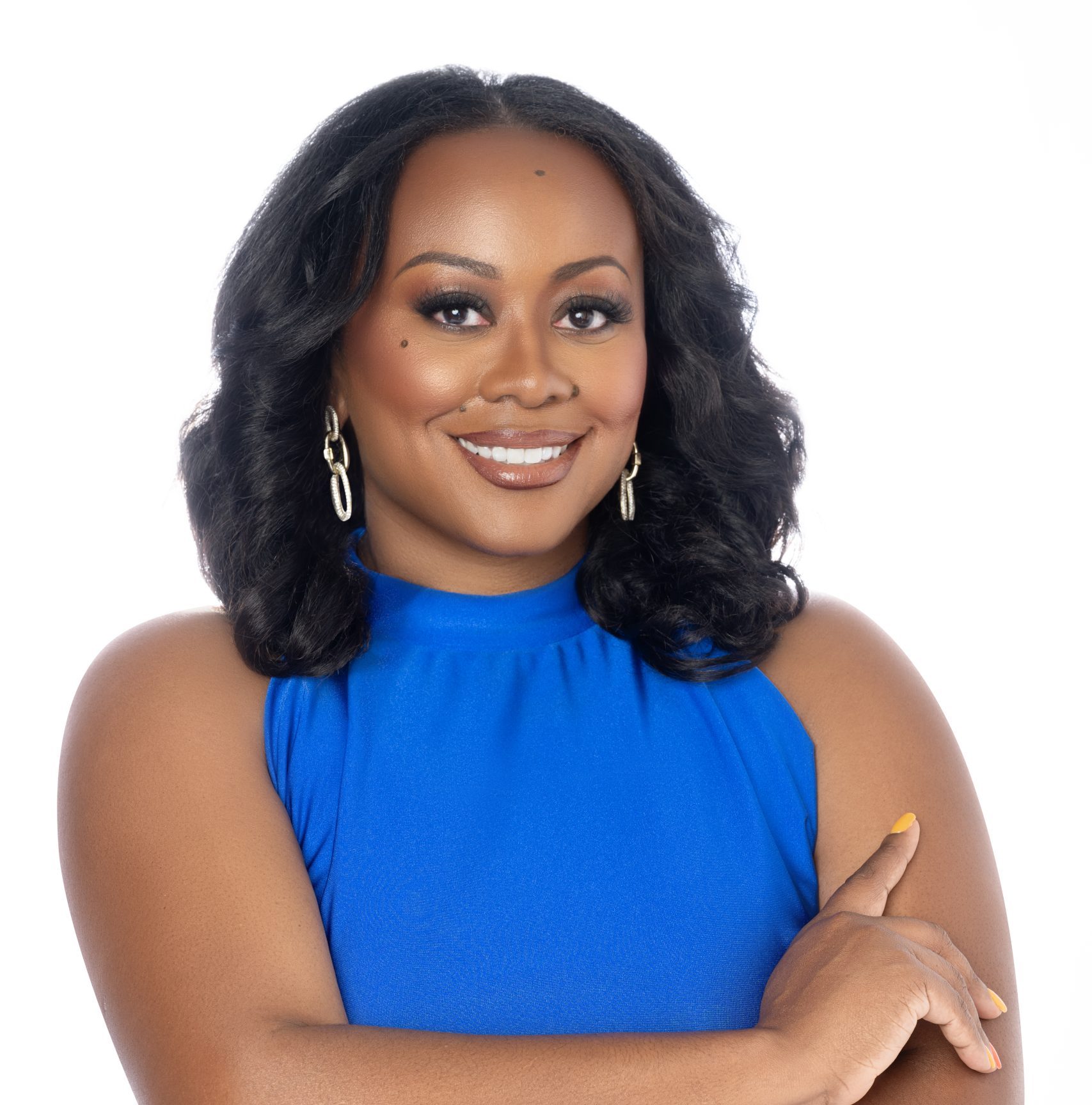
TiWanna Kenney or TK faithfully serves nonprofits and organizations as a high energy, no-nonsense community builder. This do-gooder is in the business of raising critical funds while bursting stereotypes and stigma. As the first African American woman (and currently only 1 of 3) to hold a Benefit Auction Specialist (BAS) designation from the National Auction Association, TK has been changing the face of the auctioneering industry since 2015 – literally.
TK attended the University of Oklahoma, is an auctioneering graduate of McLennan Community College, a small business owner. TK grew up in a military family and was living in Germany when the Berlin Wall fell. She credits this momentous historical event with her burning desire for justice and equality. TK is a former Army reservist herself who, like so many others, was called to active duty after 9/11. Thank you for your service, TK.
A bilingual (English/Spanish) nationally renowned speaker, TK regularly presents on leadership, empowerment, diversity and development. She also teaches auctioneering at her alma mater.
When not busy changing the world, TK loves travel, culture and food (she even chooses vacation destinations throughout the world based on whether they offer Michelin-starred restaurants to enjoy!). One can often find her reading, cooking or volunteering.
ACO CONCERT ROSTER
VIOLIN I
Raymundo Garcia, Concert Master
Leianna Pavon, Assistant
Raymond D'Alessio
Erika Elder
Laura Jacobs
Vivian Kwong
Alissa Madsen
Lynn Petro
Dawn Smith
Sol Swords
Sarah Uy
VIOLIN II
Dario Landazuri, Principal
Kyle Bryson, Assistant
Alessandro Cavedoni-Villegas
Ferris Duhon
Andrew Goolsbee
Carrie Houston
Adam Montenegro
Evan Nave
VIOLA
Eugene Gott, Principal
Mark Leger, Assistant
Justin Anderson
Lizi Li
Jared Lomangino
Art Monzingo
Iona Olive
William Satterfield
Amanda Tofflemire
Ronda von Sehrwald
Paul Zagieboylo
VIOLONCELLO
Jarrod Tuikka, Principal
Tani Barr, Assistant
Ben Bachmeier
Sarah Crawford
Brigid Dever
Claire Dittlemeir
Jacob Lambert
Caroline Magee
Henry Nachman
Nicole Pajarillo
Caleb Seboldt
John Whitney
DOUBLE BASS
James Sproat, Principal
Garrett Jaynes
Louis Handy
Alan Lopez
Noah Miller
FLUTE
Marcia Gillespie-Norder, Principal
Mattie Baker
Anna Coogan, Piccolo
OBOE
Madeline Warner, Principal
Elisa Pinno
Trish Olives, English Horn
CLARINET
YuHua Oliphint, Principal
Laura Gorman
Luis Corpus, Bass Clarinet
BASSOON
Amy Crandell, Principal
Melissa Vauk
HORN
Christine Simpson, Principal
Alyssa Collins
Kathy Nolen
Denise Stiglich
TRUMPET
Jose Yznaga, Principal
Randy Howard
David Jones
Rick Kutcher
TROMBONE
Ross Ganske, Principal
Jesse Nolen
Robert Tung, Bass
TUBA
Kenny Tsao
PIANO
Lan-Thach Kratzke
HARP
Lisa Lamb
TIMPANI
Alan Smith
PERCUSSION
Paul Robertson, Principal
Matt Garcia
Kyle Garza
Steven Garza
Collin Tracy
As you purchase your ticket, we invite you to consider making a donation, or you can give separately on this page. Every contribution helps us keep our concerts affordable and accessible for the Austin community.
Thank you to the following business that support the Austin Civic Orchestra:



This project is supported in part by a grant from the Texas Commission on the Arts
and an award from the National Endowment for the Arts.